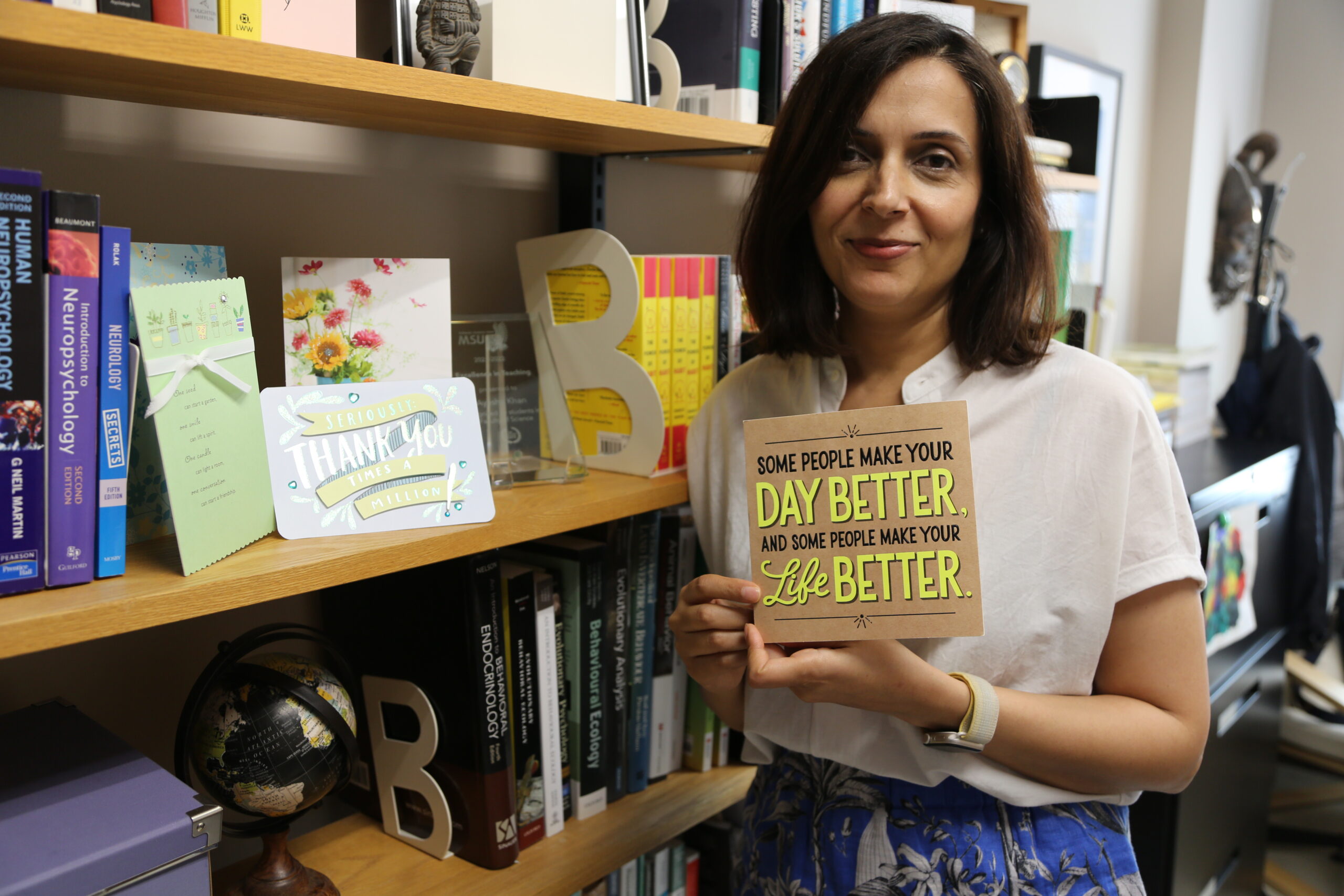
Faculty of Science opens new Office of Undergraduate Research
Sigal Balshine initially thought she was doing Noah Houpt’s mom a quick favour.
They knew each other well and shared a mutual connection to McMaster. Sigal’s a professor in the Department of Psychology, Neuroscience & Behavior. Noah was a second-year science student.
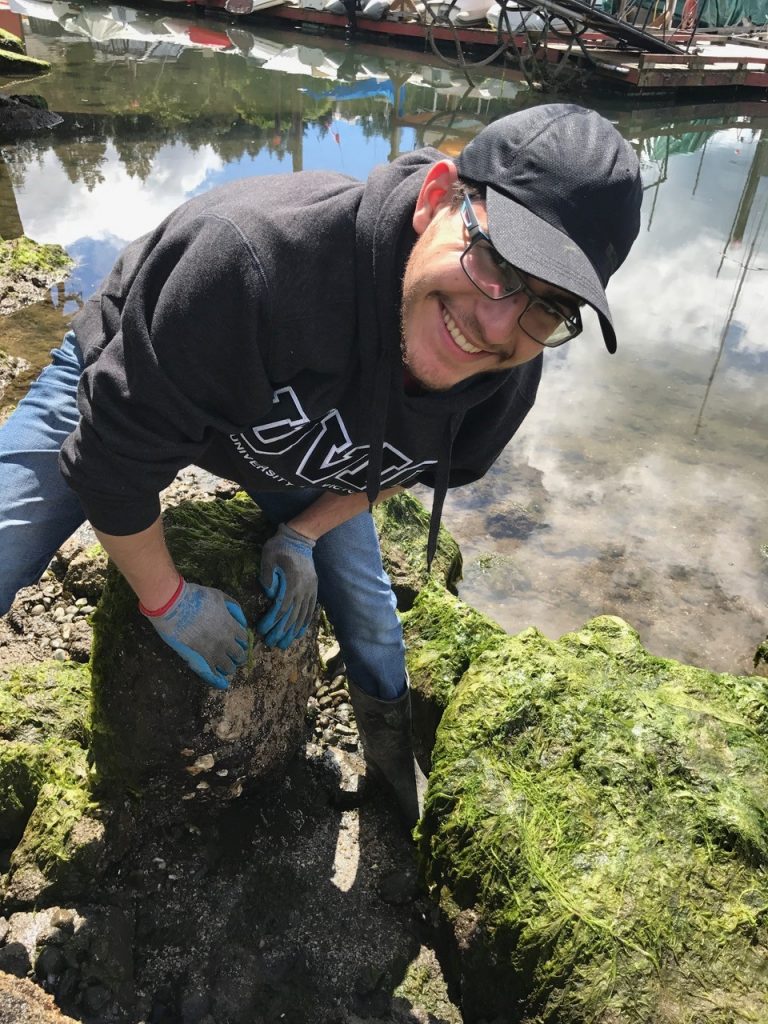 “To my horror and embarrassment, my mother reached out to Prof. Balshine before I even got the chance to send an email and introduce myself,” says Noah. “I can laugh about it now.”
Sigal felt obliged to say yes to a meeting. “I honestly thought I’d give Noah a little pep talk about science as a favour to his mom and then send him on his merry way,” says Sigal, the Faculty of Science Research Chair in Aquatic Behavior Ecology.
“But Noah’s passion and curiosity about evolution and ecology blew me away during our meeting. Despite his lack of lab experience, I decided to give Noah a chance and find a way to get him involved in our research.”
It’s a decision that paid big dividends for both Noah and Sigal. Noah became a valued member of Sigal’s Aquatic Behavioral Ecology Lab. He won two full summer undergraduate student research awards funded by NSERC and completed both a third-year research project and his fourth-year thesis in Sigal’s lab.
Noah was involved in research projects that were published in academic journals. He was the lead author on two papers. “Having those publications under my belt as an undergrad helped me win grant and scholarship money and get accepted into graduate programs,” says Noah.
After graduating from McMaster in 2019, Noah completed a master’s degree at the University of Ottawa. He’s now a third-year PhD student in Prof. Paul Turner’s lab at Yale University’s Department of Ecology & Evolutionary Biology.
“Prof. Balshine’s mentorship gave me a lot of confidence,” says Noah. “I’ve yet to come across another professor who is as active and enthusiastic in their mentorship of undergrads. She invested so much effort and time by letting me run projects that I wasn’t fully prepared to do at the time. Prof. Balshine guided me through them all and allowed me to learn by doing.”
Sigal, who’s trained more than 100 undergraduate students in her lab and out in the field, says Noah was a standout. “Noah was simply a delight to mentor. He had such an infectious excitement about science.”
 Jim Lyons has had similar experiences with the dozens of undergraduate students he’s supervised as a kinesiology professor and as the principal investigator in his Sensorimotor Neuroscience Lab. Those students are the reason why he took on the role as director of the Faculty of Science’s new Office of Undergraduate Research. “Undergrads have an originality of thought that never ceases to amaze,” says Jim. “And few things compare to seeing the students you’ve supervised and mentored get accepted into grad schools around the world or launch their own successful careers outside of academia.”
Jim is running the office together with program managers Sara Cormier and Sajeni Mahalingam and experiential programming and outreach manager Sunita Nadella. Supported by the Provost’s Strategic Alignment Fund as a three-year pilot project, the office is a first for McMaster.
The office aims to solve a problem for the Faculty for the Science. “Our challenge isn’t getting our 8,600 undergraduate students interested in research,” says Jim. “They’re already keenly interested. Our challenge is finding ways to expand and enhance meaningful research opportunities for even more of our students. It’s a good problem to have.”
The Faculty of Science already offers third-year research placement projects and fourth-year capstone thesis projects like the ones Noah was involved with in Sigal’s lab. The Office of Undergraduate Research is focused primarily on providing new opportunities for second-year students.
Research-based skills workshops are rolling out and experiential placement courses are in development. A significant challenge is lab capacity, says Jim. The office is looking at developing early-year courses that would offer research opportunities and experiences without direct lab bench involvement. Teams of students, working under the supervision of senior graduate students and postdoctoral fellows, would carry out research projects up to the point of actual data collection.
In following how science research studies are conceived and developed, students would develop valuable skills like conducting literature reviews, developing testable hypotheses and methodologies, and research writing.
Open lab meetings and shadowing graduate students are also planned.
“Our goal with all of these initiatives is to give undergraduate students a solid foundation before they join a research group,” says Jim. “They’ll be ready to contribute from day one and that should help take some pressure off faculty, postdocs and grad students who’ve been doing this training on their own for decades.”
While the mission of office is to expand research opportunities for undergrad students across the Faculty of Science, Jim says the autonomy of Departments, Faculty Investigators, and research groups will be respected. “It’s sacrosanct,” says Jim. “No one is going to tell our faculty colleagues to take on more undergraduate students. Not every research group currently has the capacity and there are labs that require advanced technical skills that undergraduate students have yet to develop. We’re here to consult and work with our colleagues to explore ways to welcome more undergrads into their research when they’re ready. This way, everyone will benefit.”
Equitable access to research opportunities is a priority for the office, adds Jim. “There shouldn’t be any barriers to research in our Faculty of Science. We want our office to be the on-ramp to research for all students. Not every undergrad has family connections or the confidence to ask a professor if they can join their research group. That student who doesn’t know how to get involved could be a future Nobel Prize winner.”
Or, like Noah, a PhD student studying at an elite university.
For more on the Faculty of Science’s new Office of Undergraduate Research, go to our.science.mcmaster.ca.
4 Things Noah Houpt Wants You to Know About Undergrad Research
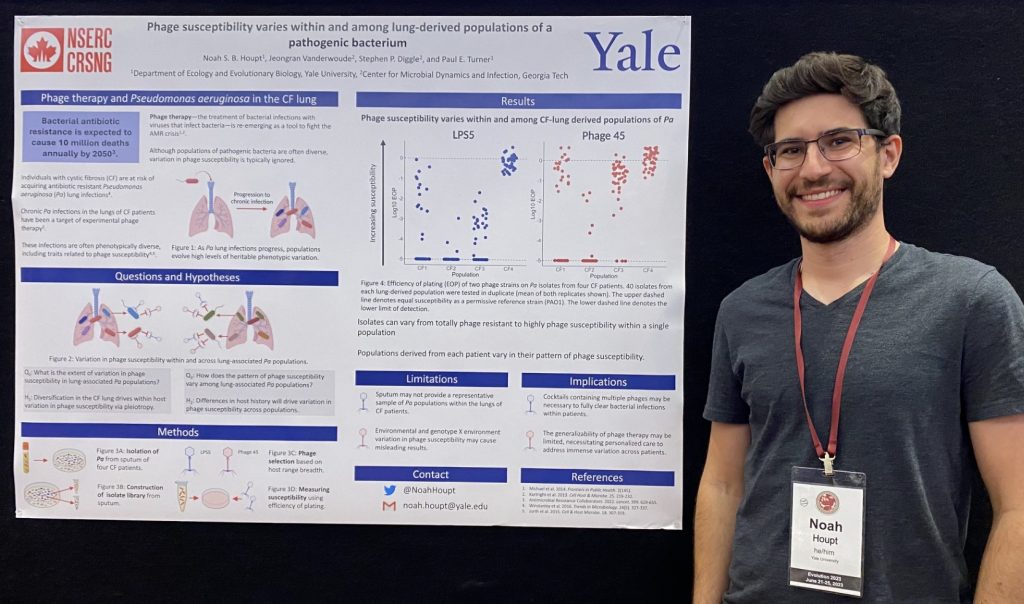 Noah was heavily involved in undergraduate research while at McMaster. He was a two-time undergraduate research award winner and was published in four academic papers. Houpt is now a third-year PhD student in Prof. Paul Turner’s lab at Yale University’s Department of Ecology & Evolutionary Biology. Here’s Noah’s advice to undergraduate students thinking about getting into research:
- Most of your course instructors have their own labs where they lead a team of researchers in scientific projects to learn new things about the world. If you’re interested in getting involved in that, many of them love bringing undergrads aboard their research teams. Under certain circumstances, you can even get paid to do research in these labs to help subsidize your tuition and living expenses.
- Before joining a lab, talk with some members of the lab other than the professor (aka. the principal investigator, or PI) to gain some insight into the vibe of the lab and the PI’s mentorship style. It’s been my experience that mentorship for undergrads can vary substantially across labs. Some forms of mentorship may work better for you than others. For example, some PIs tend to be more “hands-on”, giving you lots of feedback and guidance, while other PIs let you explore your own interests with less oversight. Also, if your goal is to get on a publication as an undergrad, ask members of the labs you want to join whether undergrads are typically able to get on publications in that group. Try to pick a lab that studies something you’re interested in and has a vibe and mentorship style that suits you.
- There are little pots of money that can help you get paid for doing research as an undergrad. Look into work-study programs through McMaster and into the National Sciences and Engineering Research Council’s (NSERC) Undergraduate Student Research Award (USRA). NSERC is a federal science funding agency that helps labs across Canada conduct research and their USRA program is designed to help undergrads get paid research experience in academic labs.
- If you’re interested in research as a career, you’ll most likely have to do a research-based graduate program following undergrad as your next career stage. In Canada, that means doing a Master’s or PhD program. While technically you would still be a student in these programs, most research-based graduate programs actually pay you a stipend that exceeds the tuition to help cover living expenses.
Related News
News Listing
Moment Mentor Memento ep. 5 with sustainable, safe and equitable urban transport champion Léa Ravensbergen
Podcast, Research excellence
Suky Zheng is getting paid to have the time of her life
Co-op, Students