Baby Lab helps undergrads grow into researchers
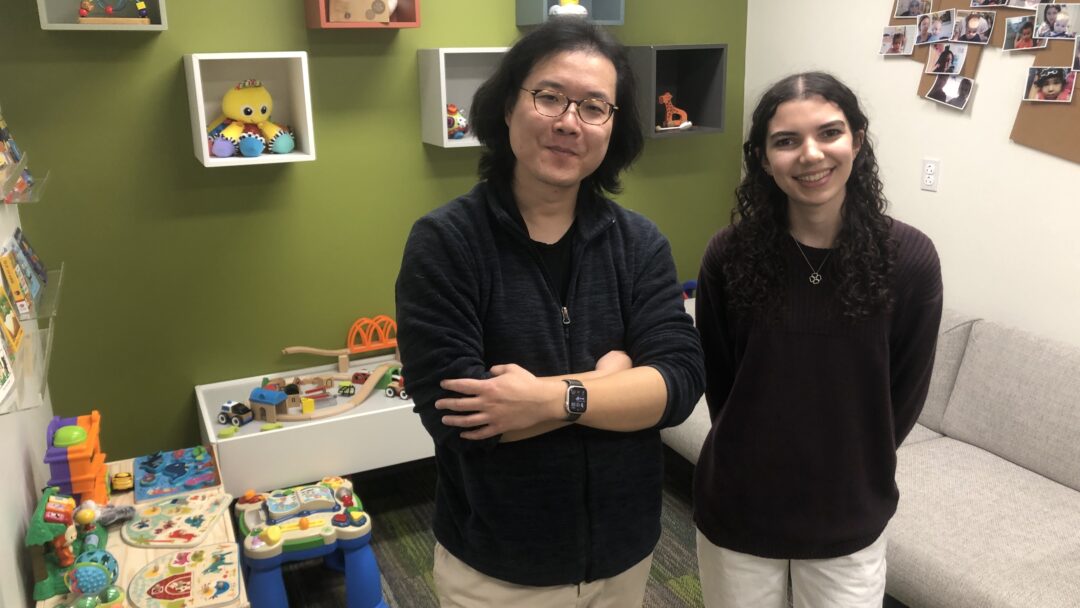
The website for Gabriel Xiao’s lab is likely the only one at McMaster to feature baby photos of the entire team.
There’s a ton of photos because Gabriel’s welcomed dozens of students into his Baby Lab. He’s supervised more than 60 undergrads since joining the Department of Psychology, Neuroscience & Behavior as an assistant professor in 2020. The Baby Lab on the third floor of the Psychology building currently has a postdoctoral fellow, three PhD students, a masters student and 30 undergraduate students.
They’re studying how human cognition develops from infancy to early childhood by running research studies with nearly 400 infants and children every year. And then there’s another 300 adult participants in other studies. Gabriel says the department’s adoption of digitization and automation to streamline the recruitment process for research studies has been a gamechanger for his lab.
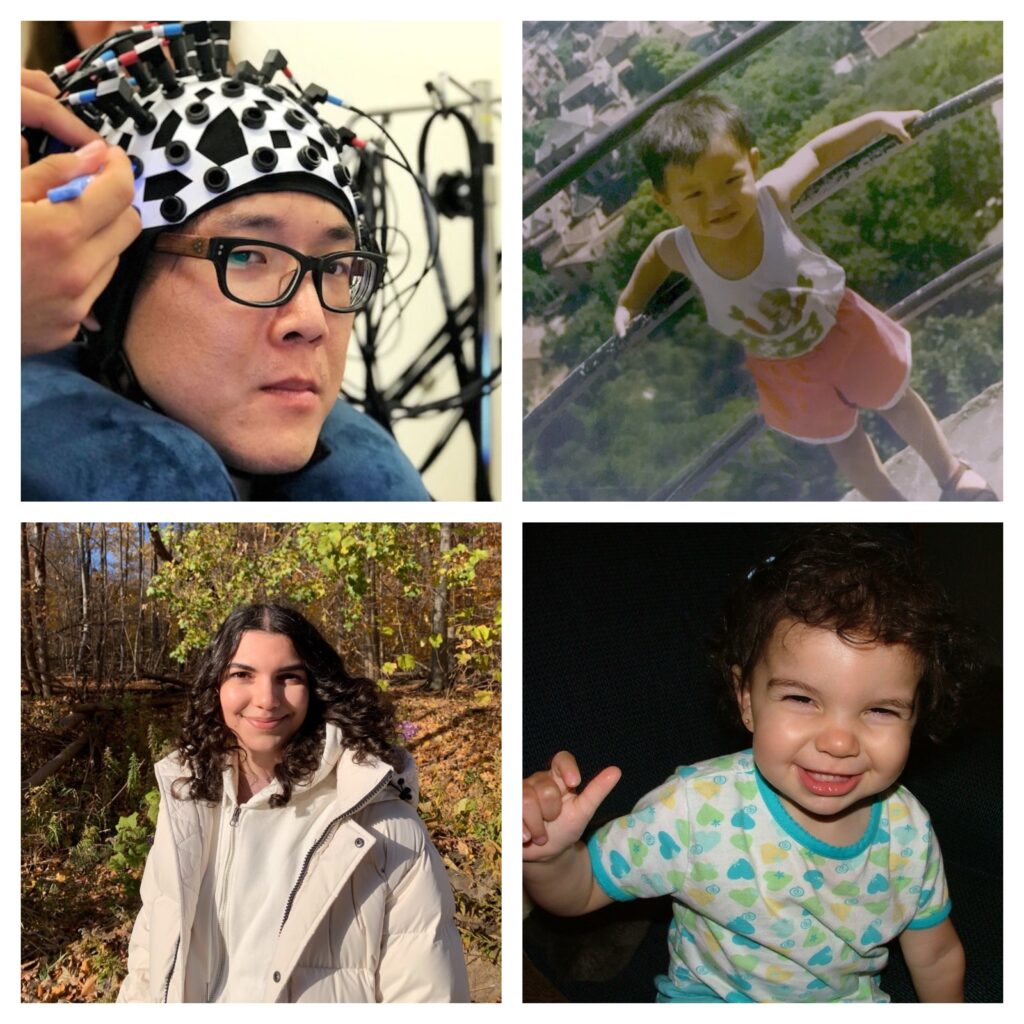 He also says the nature of his lab’s research creates loads of meaningful opportunities for undergrads. “Our research, and development studies in general, depend on teamwork,” says Gabriel. Everyone on the team has a key role to play. Students without research experience recruit study participants. More experienced students run independent studies and even lead their own research teams.
That’s how fourth-year student and lab manager Emma Resendes spent her past summer. She replicated a research study conducted remotely during COVID that looked at how environmental circumstances influence perceptual development in infants. “I got to wear many hats from recruiter and experimenter to trainer, coder and data organizer.”
Emma was in her second year at Mac when she joined Baby Lab in 2022. Level II Psychology, Neuroscience & Behavior students can apply for introductory independent studies in department labs. Baby Lab stood out for Emma. She’d previously worked with children and youth with disabilities. Those experiences sparked her curiosity about how children learn, develop, adapt to different environments and perceive the world around them. Baby Lab would let her do a deep dive into that research.
Working with babies has made Emma a better researcher. “Babies aren’t always the most reliable study participants,” says Emma, which is a polite way of saying they’re prone to meltdowns if they’re hangry or missing naptime. Short attention spans and rapidly changing moods can pose challenges when running studies. “Every baby comes into the lab with a unique personality and temperament. You have to learn how to adjust and adapt.” The other perk of working in the lab? “Babies are extremely cute and I get to play with them between classes.”
Besides spending time with babies and their caregivers, Emma says the best part of the lab has been the spirit of camaraderie. “From day one, Baby Lab’s been such a collaborative and supportive environment. Everyone’s deeply committed to the success of whatever they’re working on.”
That shared commitment can be attributed to Gabriel’s “get your hands dirty” approach to learning. “It’s such an effective way to motivate students to learn and explore.” And it’s okay if that exploration doesn’t pan out. “We encourage students to make mistakes as long as none of the equipment breaks. Admitting that no one is perfect opens up so many doors to learn from one another.”
Gabriel puts students to work by serving up mini-tasks. He breaks big projects into smaller, more manageable assignments. Those mini-tasks are then posted on the lab’s Teams channel and open to any and all students who might be interested. It’s a system that’s paid dividends. “Over the years, we’ve used mini-tasks to discover new software pipelines, build neuroimaging caps, make lab logos and proofread manuscripts.”
It’s not enough to give students meaningful work, says Gabriel. They also deserve recognition for contributing to research excellence. Every time the lab publishes a paper, students are recognized for their contributions, even if it’s for helping with proofreading. When studies are submitted to conferences, undergrads are added to the author list.
One of the lab’s undergraduate studies is about to be accepted in the Journal of Experimental Child Psychology with a past undergraduate honours thesis student as the first author. More undergrad projects are in the middle of the reviewing process or in the writing stage.
After three years in the Baby Lab, Emma is off to York University in the fall to earn her masters in clinical developmental psychology. “The Baby Lab ignited my passion for research. The more I learned, the less I knew and wanted to find out. I wouldn’t be where I am today as a student or researcher without the Baby Lab and Dr. Xiao’s supervision. I’m so lucky and grateful to have worked here.”
The feeling’s mutual. Gabriel says losing Emma will definitely hurt although he was thrilled to write her a glowing reference letter for grad school. She’s set a high bar for the next lab manager. “Emma will be missed by everyone in the lab.”
For Gabriel, it’s watching students like Emma come into their own as researchers that’s the most rewarding part of running Baby Lab. He says it’s gratifying to know that his lab delivers a great learning and research experience for students. “Even better is knowing that students are supporting each other to be so successful. I play just a small part.”
Research excellence, Undergraduate studentsRelated News
News Listing
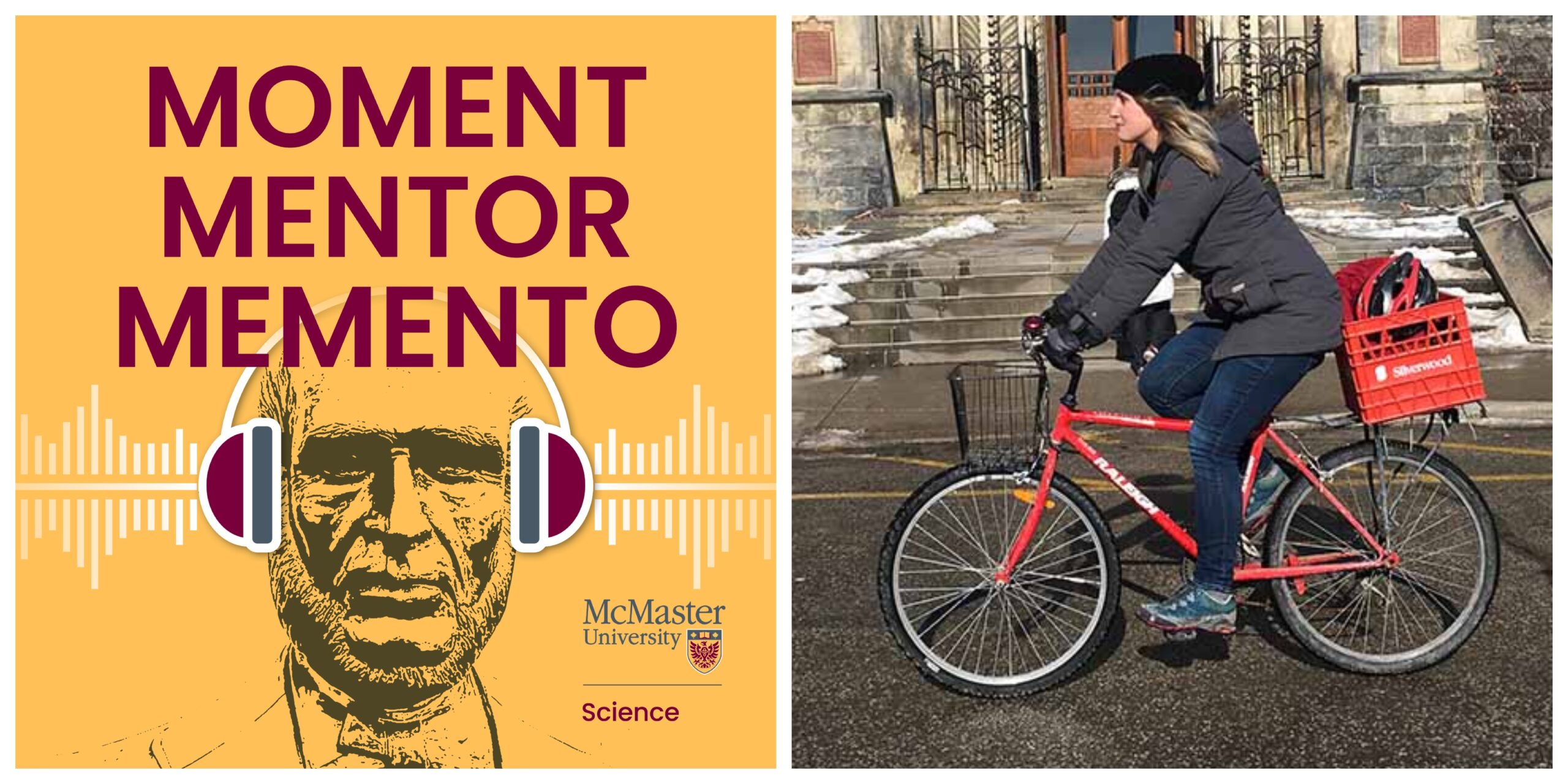
Moment Mentor Memento ep. 5 with sustainable, safe and equitable urban transport champion Léa Ravensbergen
Podcast, Research excellence
Moment Mentor Memento ep. 4 with Canada Research Chair Blaise Bourdin
Podcast, Research excellence
“A fun space for serious science” – extreme makeover gives physics lab the look and feel of a 1950s diner
Research excellence, Students, Undergrad research